"Explore the importance of health and wellness in today’s busy lifestyle and discover effective tips, strategies, and trusted resources to improve your well-being & live a healthier life."
When it comes to building strength, endurance, and overall fitness, most people focus on training and nutrition. However, one of the most underrated yet powerful factors is sleep. Your body’s ability to repair, rebuild, and grow muscles depends heavily on how much quality sleep you get each night. Without proper rest, even the best workout routine and diet plan will fall short.
In this article, we’ll explore the science behind sleep and muscle recovery, uncover how much sleep you really need, and share proven strategies to maximize your results.
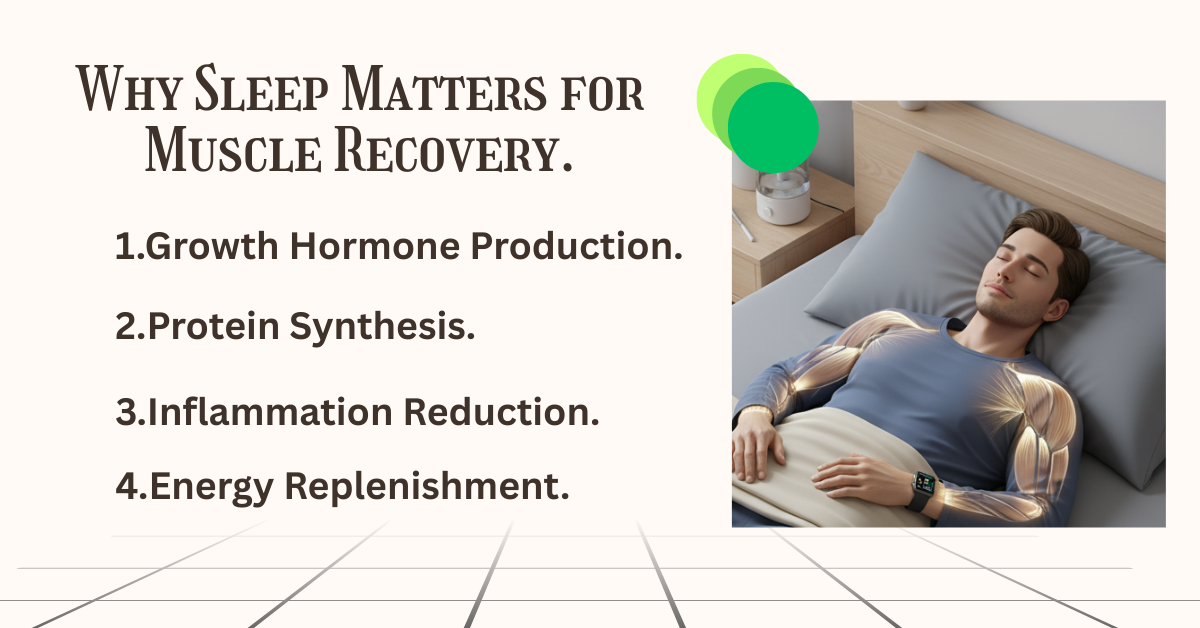
Why Sleep Matters for Muscle Recovery.
Muscle recovery is not just about feeling less sore—it’s about allowing your body to repair microscopic tears in muscle fibers caused by training. This recovery process is when your muscles become stronger, more resilient, and capable of handling greater stress.
Here’s why sleep is critical for muscle recovery:
1.Growth Hormone Production.
- Deep sleep triggers the release of growth hormone, which plays a key role in muscle repair and fat metabolism.
- Inadequate sleep can significantly reduce growth hormone secretion, slowing down your recovery.
2.Protein Synthesis.
- Muscles repair themselves through protein synthesis, which happens primarily during sleep.
- Without enough rest, protein synthesis is impaired, leading to slower healing and weaker gains
3.Inflammation Reduction.
- Intense exercise increases inflammation in the body. Quality sleep reduces inflammatory markers, helping muscles recover faster.
4.Energy Replenishment.
- During sleep, glycogen stores are restored, ensuring your muscles have the energy needed for your next workout.
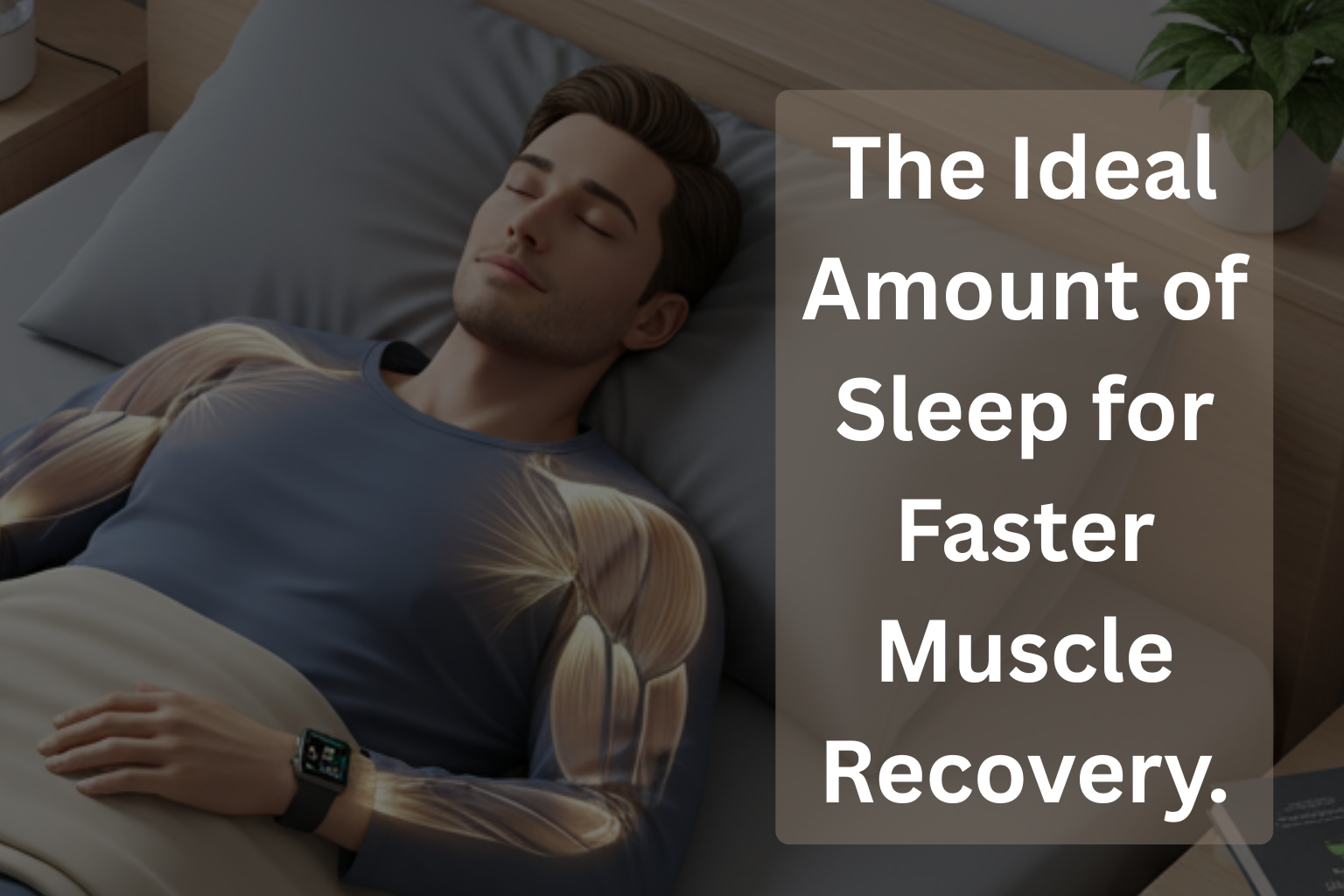
The Ideal Amount of Sleep for Muscle Recovery.
So, how much sleep do you really need for optimal muscle recovery?
Average Adults: 7–9 hours per night is generally recommended.
Athletes & Heavy Lifters: 8–10 hours may be ideal due to higher physical demands.
Short Sleepers (<6 hours): Studies show chronic sleep deprivation significantly decreases strength, reaction time, and recovery speed.
Quality vs. Quantity
It’s not just about how long you sleep—it’s about how deep and uninterrupted your sleep is. Even if you hit 8 hours, poor sleep quality can negatively impact muscle recovery.
What Happens if You Don’t Sleep Enough?
Not getting enough sleep can cause:
Slower recovery from workouts
Increased muscle soreness
Higher injury risk
Reduced strength and endurance
Negative impact on testosterone levels, which are vital for muscle growth
In fact, a study published in the Journal of Strength and Conditioning Research found that athletes who slept less than 6 hours per night had significantly slower recovery and higher injury rates compared to those who slept 8+ hours.
Power Habits to Improve Sleep for Faster Muscle Recovery.
To maximize muscle recovery, combine proper training, nutrition, and these proven sleep strategies:
1. Create a Consistent Sleep Schedule.
Going to bed and waking up at the same time every day helps regulate your body’s internal clock, leading to deeper and more restorative sleep.
2. Optimize Your Sleep Environment.
Keep your room cool (around 18–20°C or 65–68°F).
Use blackout curtains or a sleep mask.
Eliminate noise with earplugs or a white noise machine.
3. Avoid Late-Night Stimulants.
Caffeine, nicotine, and alcohol can disrupt your sleep cycle. Try to avoid these at least 6 hours before bedtime.
4. Practice Relaxation Techniques.
Deep breathing, meditation, or gentle stretching before bed can reduce stress hormones like cortisol, which interfere with sleep and muscle recovery.
5. Prioritize Post-Workout Nutrition.
Consuming protein and complex carbs after exercise supports muscle repair and glycogen replenishment, working hand-in-hand with sleep for recovery.
Power Foods and Supplements for Recovery and Sleep.
Foods that Support Muscle Recovery & Better Sleep….
Lean protein (chicken, fish, eggs, tofu)
Complex carbs (brown rice, oats, sweet potatoes)
Magnesium-rich foods (almonds, spinach, pumpkin seeds)
Tart cherry juice (boosts melatonin production)
Helpful Supplements
Whey protein – Supports muscle repair before bedtime.
Zinc & Magnesium (ZMA) – May improve sleep quality and recovery.
Melatonin – Supports faster sleep onset, especially if you struggle with insomnia.
The Connection Between Overtraining and Sleep.
Sometimes poor sleep is a result of overtraining syndrome. When you push your body too hard without proper rest, it increases cortisol levels, disrupts sleep, and slows muscle recovery.
Balancing intense training with rest and recovery is key to long-term progress.
Action Plan for Faster Muscle Recovery Through Sleep.
To recap, here’s your step-by-step plan to optimize sleep for muscle recovery:
Aim for 7–9 hours of sleep (8–10 for athletes).
Stick to a consistent sleep schedule.
Create a dark, quiet, and cool sleep environment.
Avoid late-night caffeine, alcohol, and screen time.
Prioritize post-workout nutrition with protein and complex carbs.
Consider natural supplements if needed.
Listen to your body and avoid overtraining.
By following these strategies, you’ll not only recover faster but also experience explosive growth, stronger performance, and unstoppable energy.
Conclusion.,
Sleep isn’t just “rest time”—it’s prime time for muscle recovery. If you’re serious about building strength, enhancing performance, and preventing injuries, then prioritizing sleep should be just as important as your workouts and diet.
Think of sleep as the ultimate performance enhancer—free, natural, and incredibly effective. Commit to better sleep, and your body will reward you with faster recovery, stronger muscles, and greater fitness success.