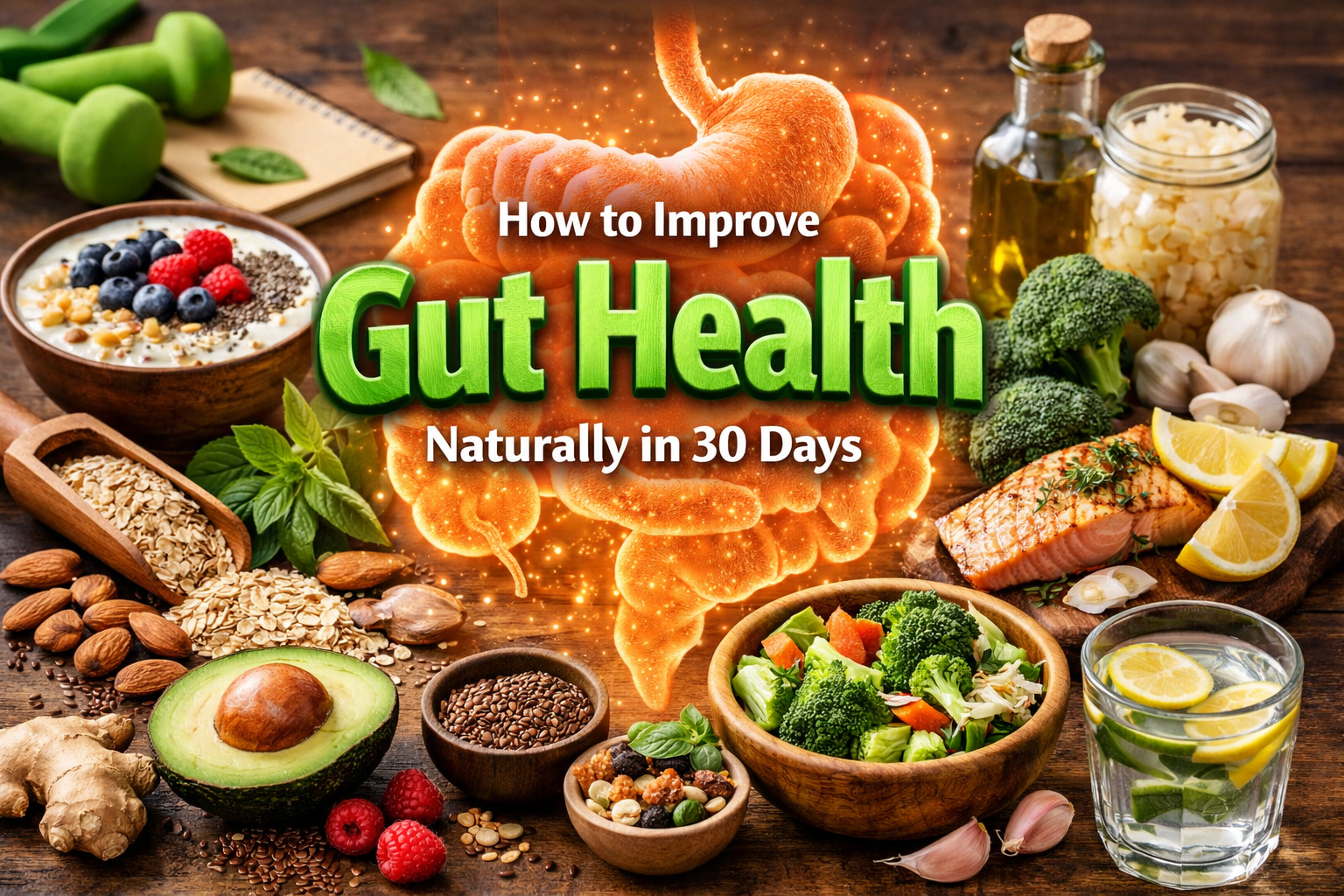
Your gut does more than digest food. It shapes your immunity, mood, skin, and energy. When your gut feels off, your whole body feels off. Bloating, fatigue, sugar cravings, brain fog. These signs often point back to your digestive system.
The good news is this. You can reset and support your gut in a natural way. You do not need extreme diets. You do not need expensive trends. You need consistency, simple habits, and patience.
If you have been wondering how to improve gut health, this 30 day guide will walk you through a realistic, science backed plan. I have seen these steps work time and again because they focus on the basics that truly matter.
Let’s begin.
Why Gut Health Matters More Than You Think?
Your gut contains trillions of microorganisms. This community is called the gut microbiome. These bacteria help break down food, produce vitamins, and protect you from harmful pathogens.
Around 70 percent of your immune system lives in your gut. In addition, most of your serotonin, the feel good neurotransmitter, is produced there. That is why digestive problems often connect with low mood and anxiety.
When your microbiome becomes unbalanced, you may notice:
Frequent bloating
Constipation or diarrhea
Food sensitivities
Low energy
Skin issues
Increased cravings
Understanding this link is powerful. Once you support your gut, many other areas improve.
The 30 Day Gut Reset Plan.
Instead of changing everything overnight, we will build habits step by step. Each week has a clear focus. This structure makes the process simple and sustainable.
Week 1: Remove the Biggest Gut Disruptors.
Before adding anything new, clear out what harms your gut.
1. Cut Back on Added Sugar
Excess sugar feeds harmful bacteria and yeast. As a result, imbalance grows. Read labels carefully. Hidden sugars appear in sauces, cereals, and flavored yogurts.
Choose whole fruits instead. They contain fiber, which supports healthy bacteria.
2. Reduce Ultra Processed Foods
Highly processed foods often lack fiber and contain additives. These additives may irritate the gut lining in some people.
Focus on whole foods. Think vegetables, fruits, legumes, whole grains, nuts, seeds, eggs, and lean proteins.
3. Limit Alcohol
Alcohol can disrupt the gut barrier and change bacterial balance. If you drink, reduce the frequency. Give your gut a break.
At the end of week one, many people already notice less bloating and more stable energy.
Week 2: Feed the Good Bacteria.
Now that you have reduced irritants, it is time to nourish your microbiome.
1. Increase Fiber Gradually
Fiber is fuel for beneficial bacteria. However, increase it slowly to avoid discomfort.
Add:
Oats
Chia seeds
Lentils
Beans
Leafy greens
Berries
Drink enough water as you increase fiber. This step is essential.
2. Add Fermented Foods
Fermented foods introduce helpful bacteria. Try small portions at first.
Choose products with active cultures and no added sugar.
3. Diversify Your Diet
Research shows that eating a wide range of plant foods supports a more diverse microbiome. Aim for at least 20 different plant foods per week.
Variety is a secret weapon when learning how to improve gut health naturally.
Week 3: Repair and Support the Gut Lining.
Your gut lining acts as a protective barrier. When it weakens, unwanted particles may pass through. This can trigger inflammation.
1. Prioritize Protein
Protein provides amino acids that help maintain tissue health. Include eggs, fish, chicken, tofu, beans, or Greek yogurt daily.
2. Include Omega 3 Fats
Omega 3 fatty acids support a balanced inflammatory response. Fatty fish like salmon, sardines, and mackerel are excellent choices. Walnuts and flaxseeds also help.
3. Stay Hydrated
Water supports digestion and stool movement. Aim for steady hydration throughout the day. Start your morning with a glass of water.
At this stage, many people feel lighter and more comfortable after meals. That is a strong sign of progress.
Week 4: Lifestyle Habits That Transform Your Gut.
Food is powerful. However, lifestyle shapes gut health just as much.
1. Improve Sleep Quality
Poor sleep disrupts gut bacteria balance. Aim for 7 to 9 hours each night. Keep a regular schedule. Avoid screens before bed.
2. Manage Stress Daily
Chronic stress affects digestion and may worsen symptoms like IBS. Try:
Deep breathing
Short walks
Gentle stretching
Journaling
Even 10 minutes helps.
3. Move Your Body
Regular movement stimulates digestion. A simple 15 minute walk after meals can reduce bloating and improve blood flow to digestive organs.
When people ask me how to improve gut health, I always mention stress and sleep. They are often overlooked but extremely important.
A Simple 30 Day Overview.
Here is a clear breakdown of the plan:
| Week | Focus Area | Key Actions |
|---|
| Week 1 | Remove irritants | Reduce sugar, processed food, alcohol |
| Week 2 | Feed good bacteria | Increase fiber, add fermented foods, diversify plants |
| Week 3 | Repair support | Add protein, omega 3, hydrate well |
| Week 4 | Lifestyle reset | Improve sleep, manage stress, walk daily |
Common Mistakes That Slow Progress.
Even with good intentions, some habits can hold you back.
1. Changing Everything at Once
Rapid changes may cause bloating or discomfort. Move gradually. Your microbiome needs time to adapt.
2. Ignoring Portion Size
Even healthy foods can cause discomfort in very large portions. Listen to your body.
3. Obsessing Over Supplements
Supplements can help in certain cases. However, they are not magic. Real food and lifestyle changes come first. If you are unsure, speak with a healthcare professional.
Understanding these mistakes can speed up your journey of learning how to improve gut health effectively.
Signs Your Gut Is Improving.
Progress may feel subtle at first. Watch for these encouraging signs:
These improvements often build week by week. Stay consistent.
Long Term Habits for Lasting Results.
Thirty days can create momentum. However, gut health is a lifelong practice.
Keep rotating plant foods. Continue managing stress. Protect your sleep. Over time, these habits create a resilient and balanced microbiome.
If someone asks you how to improve gut health, you will know the answer is not a quick fix. It is daily care.
Final Thoughts.
Learning how to improve gut health does not require extreme measures. It requires awareness and commitment. Small daily actions create powerful change over time.
Start simple. Remove what harms. Add what nourishes. Protect your sleep. Calm your stress. Move your body.
Your gut responds to consistency. In just 30 days, you can build a stronger foundation for better digestion, stronger immunity, and steady energy.
And that is a transformation worth committing to.
"Explore the importance of health and wellness in today’s busy lifestyle and discover effective tips, strategies, and trusted resources to improve your well-being & live a healthier life."