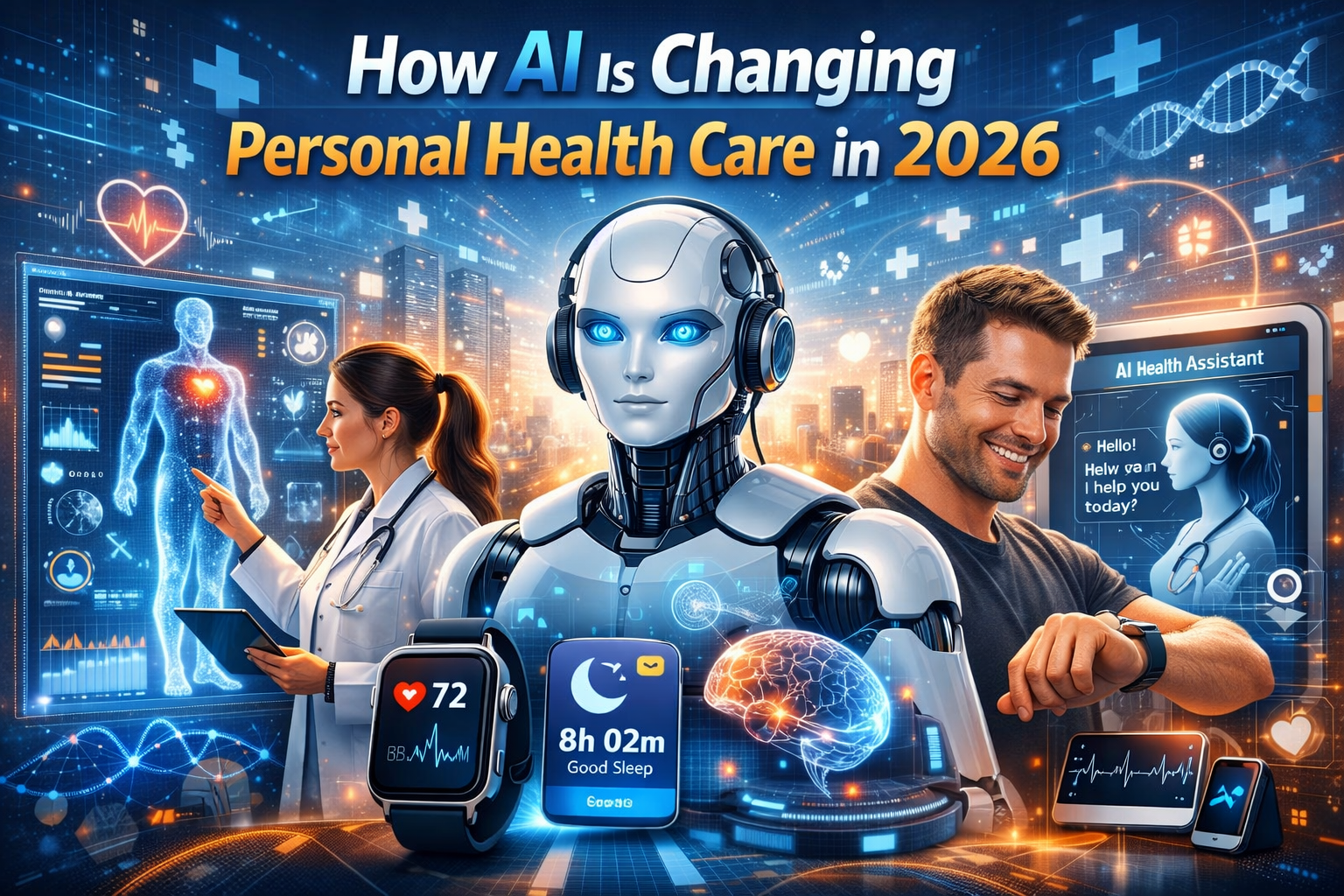
In 2026, health care is no longer limited to hospitals, clinics, or occasional doctor visits. Artificial Intelligence (AI) has transformed personal health care into something smarter, faster, and more personalized than ever before. From predicting diseases before symptoms appear to helping individuals manage their daily wellness routines, AI is redefining how people in the USA and UK take control of their health.
This powerful shift is not about replacing doctors—it’s about enhancing human decision-making with intelligent technology. Let’s explore how AI is revolutionizing personal health care in 2026 and why this change matters for everyone.
The Rise of AI in Personal Health Care.
Artificial Intelligence has moved beyond experimental stages and is now deeply integrated into everyday health care systems. In 2026, AI algorithms analyze massive amounts of health data—medical history, lifestyle habits, wearable device metrics, and even genetic information—to deliver highly accurate insights.Artificial Intelligence has moved beyond experimental stages and is now deeply integrated into everyday health care systems. In 2026, AI algorithms analyze massive amounts of health data—medical history, lifestyle habits, wearable device metrics, and even genetic information—to deliver highly accurate insights.
What makes AI so revolutionary is its ability to learn continuously. The more data it processes, the smarter it becomes. This means personal health care is no longer generic. Instead, it is customized, predictive, and proactive, helping people prevent illness rather than just treat it.
According to global health technology trends, AI-driven health solutions are becoming a standard part of modern health care systems rather than optional tools.
Personalized Health Care Like Never Before.
One of the most impactful benefits of AI in 2026 is personalized health care. Traditional health advice often follows a one-size-fits-all model, but AI changes that completely.
AI-powered health platforms analyze individual data such as:
Age, gender, and genetics
Diet and physical activity
Sleep patterns and stress levels
Existing medical conditions
Using this information, AI provides personalized recommendations for nutrition, exercise, supplements, and daily habits. For example, instead of generic diet advice, an AI system can suggest specific foods based on gut health, metabolic rate, and lifestyle preferences.
This level of personalization empowers individuals to make smarter decisions about their health care every single day.
AI-Powered Wearables and Real-Time Health Monitoring.
In 2026, wearable technology plays a crucial role in personal health care. Smartwatches, fitness trackers, and health rings powered by AI now monitor vital signs in real time.
Heart rate variability
Blood oxygen levels
Sleep quality
Physical activity
Stress indicators
What makes them intelligent is AI’s ability to detect patterns and anomalies. If something unusual happens—such as irregular heart rhythms or sudden changes in oxygen levels—the system can alert the user instantly and recommend next steps.
This real-time monitoring reduces health risks and gives people peace of mind, making preventive health care more accessible than ever.
Predictive Health Care: Preventing Problems Before They Start.
One of the most game-changing aspects of AI in health care is predictive analytics. Instead of reacting to illness, AI helps predict potential health issues before they become serious.
By analyzing long-term data trends, AI systems can identify early warning signs of conditions such as:
Diabetes
Heart disease
Hypertension
Mental health disorders
For individuals, this means early lifestyle changes can significantly reduce long-term risks. For example, AI may detect rising stress levels and poor sleep patterns and suggest relaxation techniques or schedule adjustments before burnout occurs.
Predictive health care is a powerful step toward longer, healthier lives.
AI and Mental Health Care in 2026.
Mental health has become a major focus of modern health care, and AI plays a supportive role in this sensitive area. In 2026, AI-powered mental health apps offer guided therapy, mood tracking, and stress management tools.
These systems analyze speech patterns, text inputs, and behavioral data to detect emotional changes. While AI does not replace professional therapists, it provides 24/7 support, especially for people who may hesitate to seek help immediately.
AI-driven mental health tools also help reduce stigma by making mental health care more private, accessible, and convenient.
Virtual Health Assistants and AI Chatbots.
AI-powered virtual health assistants have become a trusted part of personal health care in 2026. These intelligent assistants answer health-related questions, remind users to take medications, and guide them through healthy routines.
Unlike basic chatbots, modern AI assistants understand context and user behavior. They can:
Explain symptoms in simple language
Suggest when to seek medical advice
Help manage chronic conditions
Provide daily wellness tips
This immediate access to reliable health care information saves time and reduces unnecessary stress, especially for busy individuals.
AI in Nutrition and Fitness Planning.
Nutrition and fitness are essential pillars of good health care, and AI has transformed both areas. In 2026, AI-powered apps create dynamic fitness plans that adapt based on performance, recovery, and personal goals.
For nutrition, AI analyzes dietary habits and health data to recommend meal plans that support energy levels, digestion, and weight management. These smart systems even consider cultural food preferences, making them ideal for diverse populations in the USA and UK.
This intelligent guidance makes healthy living more achievable and sustainable.
Data Security and Ethical Health Care Concerns.
With AI handling sensitive health data, privacy and ethics are critical concerns in 2026. Reputable health care platforms now use advanced encryption and strict data protection policies to ensure user safety.
Governments and regulatory bodies in the USA and UK continue to update laws to protect personal health information. Transparency, user consent, and ethical AI development are now core principles of responsible health care innovation.
The Future of Personal Health Care with AI.
Looking ahead, AI will continue to evolve as a supportive partner in health care. Instead of replacing human professionals, AI enhances their capabilities by providing accurate data, predictive insights, and personalized recommendations.
In 2026, personal health care is more empowering, intelligent, and proactive than ever before. Individuals are no longer passive recipients of care—they are active participants in their own wellness journeys.
AI is not just changing health care—it is redefining personal well-being. In 2026, smart technology helps people live healthier, more informed, and more balanced lives. From wearable devices and predictive analytics to mental health support and personalized nutrition, AI has become an essential tool in modern personal health care.
As technology continues to advance, one thing is clear: the future of health care is smarter, more human-focused, and driven by intelligent innovation.
"Explore the importance of health and wellness in today’s busy lifestyle and discover effective tips, strategies, and trusted resources to improve your well-being & live a healthier life."