"Explore the importance of health and wellness in today’s busy lifestyle and discover effective tips, strategies, and trusted resources to improve your well-being & live a healthier life."
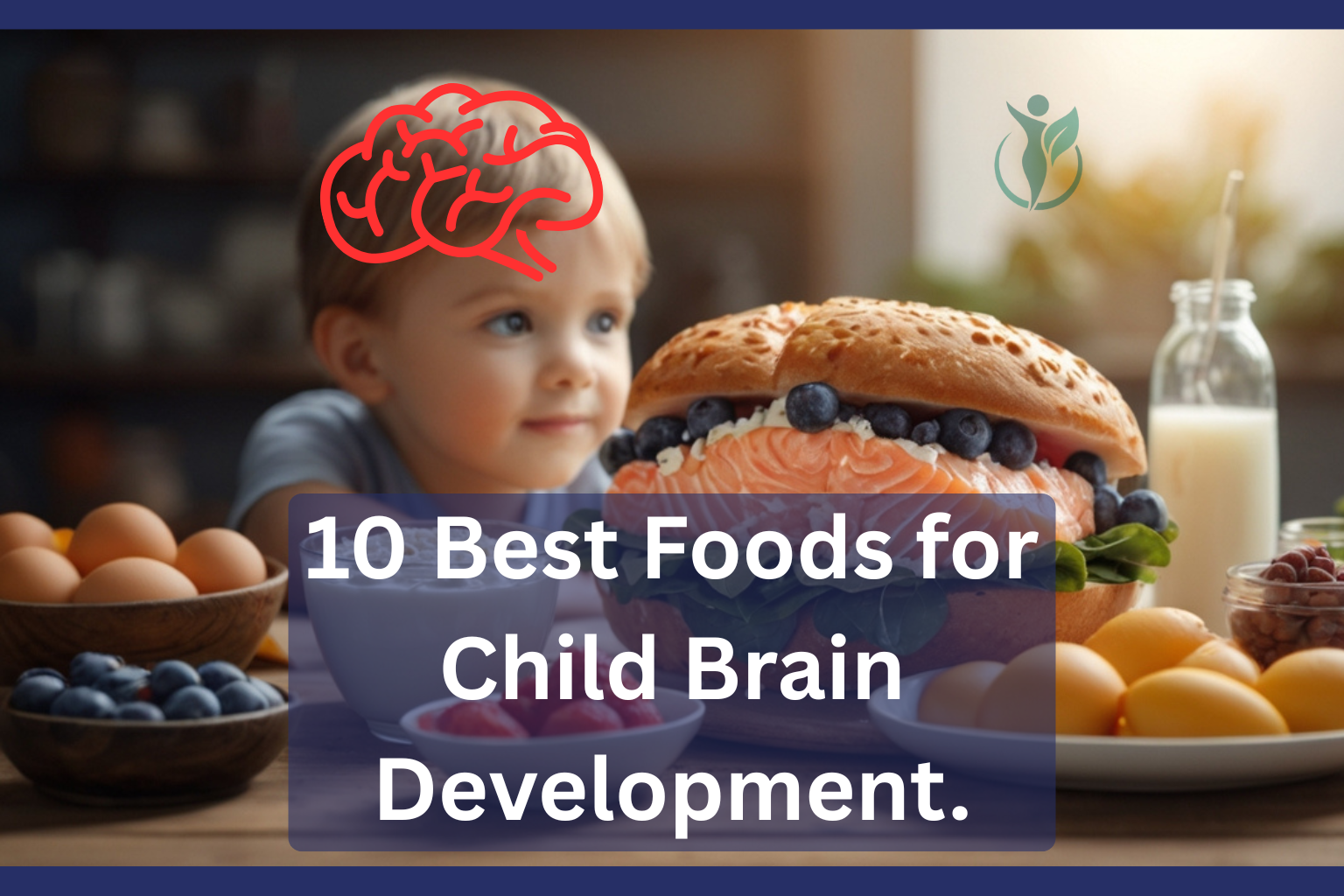
Every parent wants their child to grow not just physically, but mentally—strong, sharp, and ready to learn. If you’re looking for the powerful, scientifically backed ways to boost your child’s cognitive potential, you’ve come to the right place. Below, you’ll discover 10 best foods for child brain development—each chosen with precision to support memory, learning, focus, and neural health.
Why “brain food” matters.
Before diving into the foods, it helps to understand why diet matters so much:
The developing brain is a high-energy organ. It demands a constant supply of glucose, protein, healthy fats, and micronutrients like iron, zinc, iodine, choline to build neural networks, form myelin (the insulation around nerves), and maintain neurotransmitter balance.
Nutrient deficits early in life can lead to long-term deficits in cognition and brain structure, even if you “catch up” later.
Observational studies show children with higher diet quality (whole grains, soft fats, dairy, fruits, vegetables) had larger brain volumes and better cognitive outcomes later.
The American Academy of Pediatrics emphasizes nutrients such as choline, folate, iron, iodine, long-chain polyunsaturated fatty acids (LC-PUFAs) as especially critical in toddler years.
What you feed a child is one of the most powerful levers you have to influence their brain development.
So, here are 10 best foods for child brain development you can start incorporating today:
1. Fatty Fish (Salmon, Sardines, Mackerel).
Why it’s powerful:
Fatty fish are rich in omega-3 fatty acids, especially DHA and EPA, which are structural building blocks in the brain and cell membranes.These fats support synaptic function, reduce inflammation, and help with learning and memory.
How to use it:
Offer grilled or baked salmon, sardines, or mackerel 2–3 times a week. For younger children, you can flake cooked fish into mashed potatoes or mix into pasta. Just avoid high-mercury fish like swordfish or large tuna.
Example: Omega-3-rich salmon + steamed veggies + brown rice makes a balanced, brain-focused meal.
2. Eggs (Especially the Yolks).
Egg yolks are one of the richest dietary sources of choline, which is crucial for memory formation and brain cell signaling. Eggs also supply high-quality protein, B-vitamins, and healthy fats.
Hard-boil eggs for a snack, scramble for breakfast, or mix into a vegetable stir-fry. For toddlers, you can mash them with veggies.
Power tip: Include one whole egg daily (if no allergy), with caution if cholesterol is a concern.
3. Leafy Greens (Spinach, Kale, Swiss Chard).
Leafy greens deliver folate, vitamin K, iron, magnesium, and antioxidants—nutrients linked to improved memory and cognitive performance.Iron from greens helps energy delivery in the brain; folate supports neural growth.
Add spinach or kale to smoothies, omelets, lasagnas, or stews. Blend greens finely into sauces or soups so kids don’t notice.
4. Nuts & Seeds (Walnuts, Chia, Flax, Almonds).
These are packed with healthy fats, vitamin E, zinc, magnesium, and plant-based omega-3s (ALA).Vitamin E fights oxidative stress in the brain; zinc supports neurotransmitter function.
How to use it:
Grind flax or chia seeds and mix into porridge, yogurt, or smoothies.
Offer small portions of walnuts or almonds (chopped) as snacks.
Use nut butters (if allergy-safe) on whole-grain toast or fruit.
Caution: Be careful of choking risk—grind or chop well for younger kids.
4. Nuts & Seeds (Walnuts, Chia, Flax, Almonds).
Beans are excellent vegetarian sources of iron, folate, protein, and complex carbs, which support sustained brain energy.Because they release glucose slowly, legumes avoid sugar spikes that can impair focus.
How to use it:
Make bean soups, lentil stews, bean spreads (hummus), or add them to pasta or rice dishes.
6. Whole Grains (Brown Rice, Quinoa, Oats, Whole-wheat Bread).
Whole grains provide glucose (the brain’s fuel), along with B-vitamins, magnesium, fiber. Steady glucose ensures sustained mental energy.
How to use it:
Offer oatmeal for breakfast, brown rice or quinoa for lunch/dinner, whole-grain wraps, or whole-grain pancakes.
7. Yogurt & Fermented Dairy (Plain, Unsweetened).
Yogurt gives protein, iodine, calcium, B-vitamins, and supports the gut-brain axis through probiotics. A healthy gut microbiome influences mood and cognition.
How to use it:
Serve plain yogurt as a snack, mix into smoothies, or layer with fruit. Avoid high-sugar flavored versions.
8. Berries (Blueberries, Strawberries, Raspberries).
Berries are antioxidant powerhouses, especially rich in flavonoids (anthocyanins) that protect brain cells and support memory. American Society for Nutrition+3EatingWell+3CHOC – Children’s Health Hub+3 Studies show berry consumption is linked to improved cognitive performance.
How to use it:
Add berries to cereal, yogurt, pancakes, or smoothies. Use fresh or frozen (which retain most nutrients).
9. Lean Meat or Poultry (Chicken, Turkey, Lean Beef).
Lean meats supply heme-iron, zinc, B-vitamins (including B12)—nutrients less readily available in plant sources. Harvard Health+2Frontiers+2 Iron is critical for oxygen delivery in the brain; zinc supports neurotransmission.
How to use it:
Grill or bake lean chicken/turkey or beef strips. Dice into child-friendly portions. Use in stir-fries or sandwiches with veggies.
10. Eggs-Plus Fortified Foods & “Smart” Add-ons.
While eggs are already covered, there are allied foods to consider:
Fortified cereals or milks: Some are fortified with iron, vitamin B12, B6, and omega-3 — useful especially when dietary intake is low.
Dark chocolate (in moderation): Contains flavonoids and can provide a small cognitive boost. Use as an occasional treat.
Citrus fruits (oranges, kiwi): High in vitamin C and flavonoids that support neuronal health.
Seaweed or iodized salt: Supports iodine intake, crucial for thyroid and cognitive function.
Tips to Maximize Brain Benefits.
Balance & diversity: No single “superfood” suffices. A varied plate combining several of the 10 foods above is best.
Combine smartly: Pair iron-rich foods with vitamin C–rich foods to enhance absorption (e.g. beans + orange).
Regular meals & snacks: Keep energy levels steady to support concentration.
Minimize processed sugars and refined carbs: Diets high in these are linked to poorer brain outcomes.
Stay hydrated: Water is critical for cognition.
Start early (even during pregnancy): Maternal diet shapes fetal brain growth.
Watch total calorie needs: Don’t overload — match portions to age and activity.
Sample One-Day Brain-Boosting Menu (for school-aged child).
| Meal | Brain-Focused Menu |
|---|
| Breakfast | Whole-grain oatmeal + chopped walnuts + berries + milk or yogurt |
| Mid-morning Snack | Hard-boiled egg + carrot sticks |
| Lunch | Grilled salmon + quinoa + steamed spinach + orange slices |
| Afternoon Snack | Plain yogurt with a drizzle of honey + chia seeds |
| Dinner | Lean chicken stir-fry with kale & bell peppers + brown rice |
| Dessert / Treat | A few dark chocolate squares + strawberries |
This combines multiple brain-boosting elements — whole grains, healthy fats, proteins, greens, berries.
Addressing Common Myths & Questions.
1.Do supplements replace real food?
No. Whole foods provide complex, synergistic nutrients that supplements alone can’t replicate. Supplements might help in cases of deficiency, but always under medical supervision.
2.Isn’t fat bad for kids?
Not all fats. Healthy fats like omega-3s (from fish, nuts) and monounsaturated fats (avocado, olive oil) are essential for brain structure. Avoid trans fats and excessive saturated fats.
3.Are plant-based diets okay for brain health?
Yes—if well planned. Beans, legumes, seeds, nuts, fortified foods, and leafy greens can cover many nutrient bases. But vegetarian kids need special attention to iron, B12, and omega-3 sources.
If you invest in their nutrition today, you’re empowering their neural potential tomorrow. These 10 best foods for child brain development are not just trendy picks — they’re grounded in research, biologically meaningful, and practically usable.
Start small: add one brain-boosting food daily, rotate varieties, and aim for balance. Over time, your child’s diet will be an unstoppable engine fueling creativity, focus, memory, and mental resilience.